Slow Looking
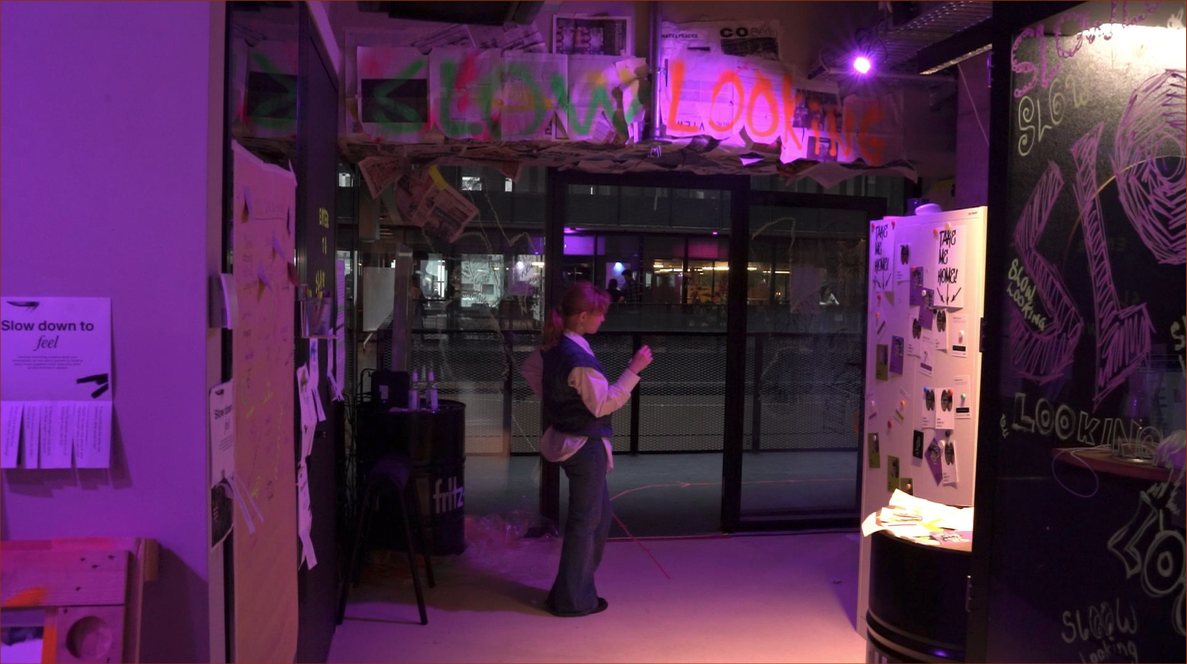
A group project that paired slow looking, the practice of looking at art for much longer than a glance, with Berlin's street art. We showed it as an installation at Berlin Design Week.
- Role
- Design strategy and event planning
- Team
- Students and faculty members
- Methods
- Problem framing, system mapping, futures cone, storyboarding, floor plans
- Shown at
- Berlin Design Week
The challenge
Short-form feeds train us to glance and scroll on. We wanted to find out whether slow looking (taking your time to really observe something) could help young adults in Berlin slow down, and whether the city's street art and graffiti could be the way in.
The outcome
An installation at Berlin Design Week where visitors practised slow looking with projected street art photos and printed prompts, plus a plan for where the project could go next.
- Problem framing
- System map
- Futures cone
- Storyboard
- Practice session
- Installation
Giving the group a shared direction
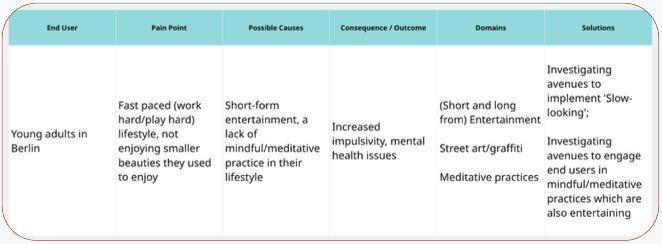
After some desk research and informal chats, I wrote a problem statement: young adults in Berlin who watch a lot of short-form content find it hard to be in a mindful state. It gave the group a focus and also showed what we didn't know yet, so I turned each part of it into a research question.
Planning for more than one future
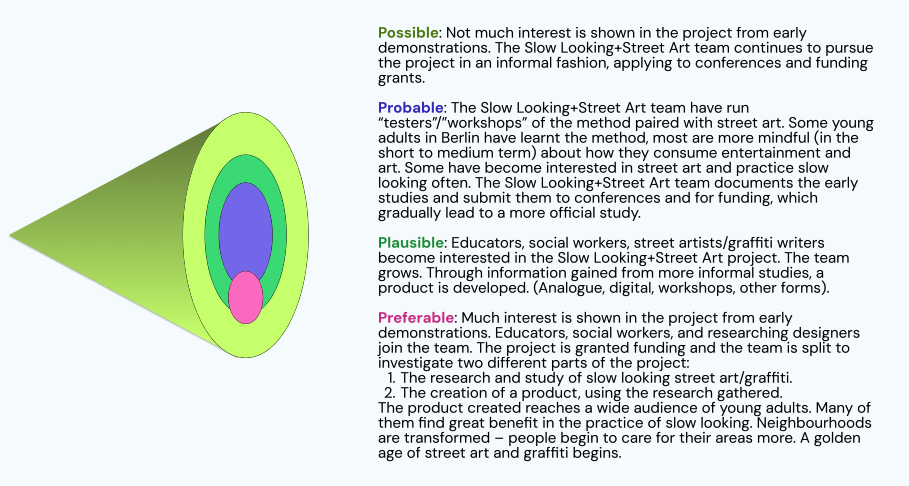
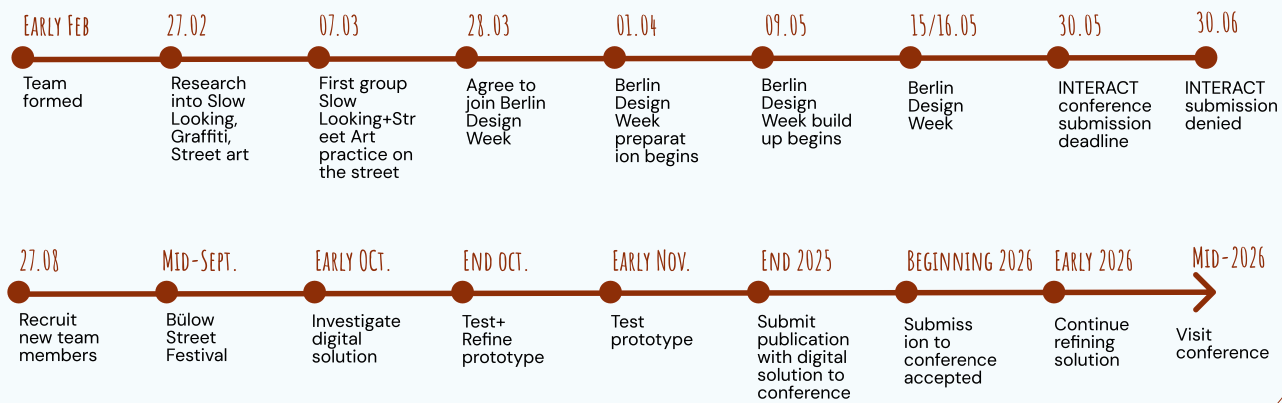
Together with the group I drafted a futures cone, mapping out possible, plausible, probable and preferable outcomes. It helped us agree on our values, how we'd handle setbacks and which stakeholders and funding we'd need to keep going. A set of milestones then kept deadlines in view, from conference submissions to street festivals.
From a storyboard to a floor plan
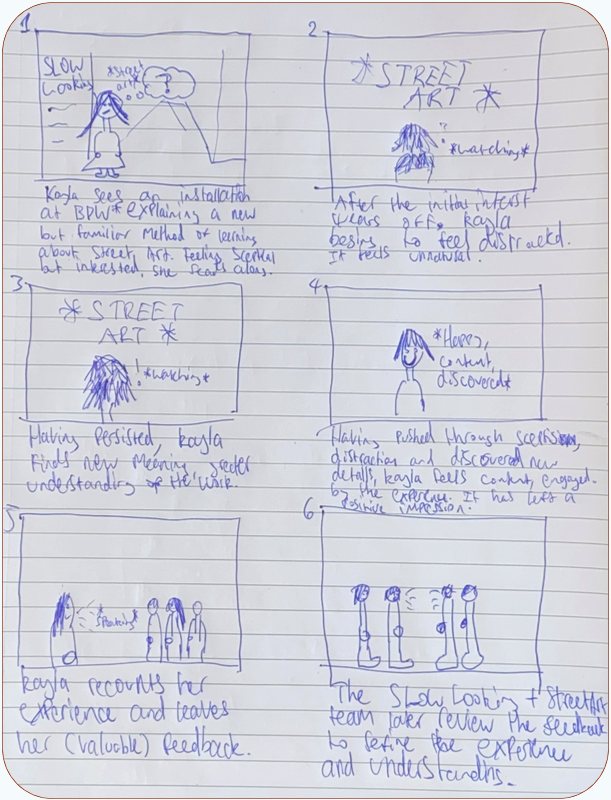
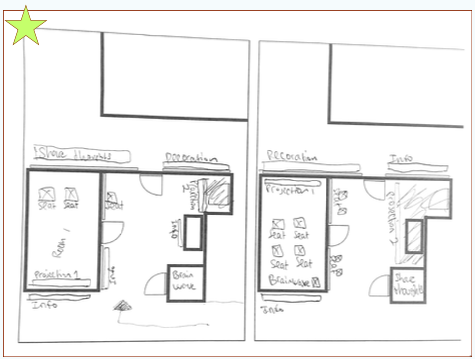
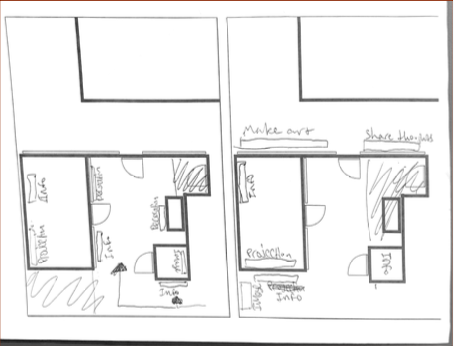
Once our spot at Berlin Design Week was confirmed, I storyboarded a visitor's journey and used it to set goals. We wanted visitors to understand and try the method, think more about the artwork than they otherwise would and leave us some feedback. I then sketched floor plans of the room to talk through with the team. The starred layout is the one we built.
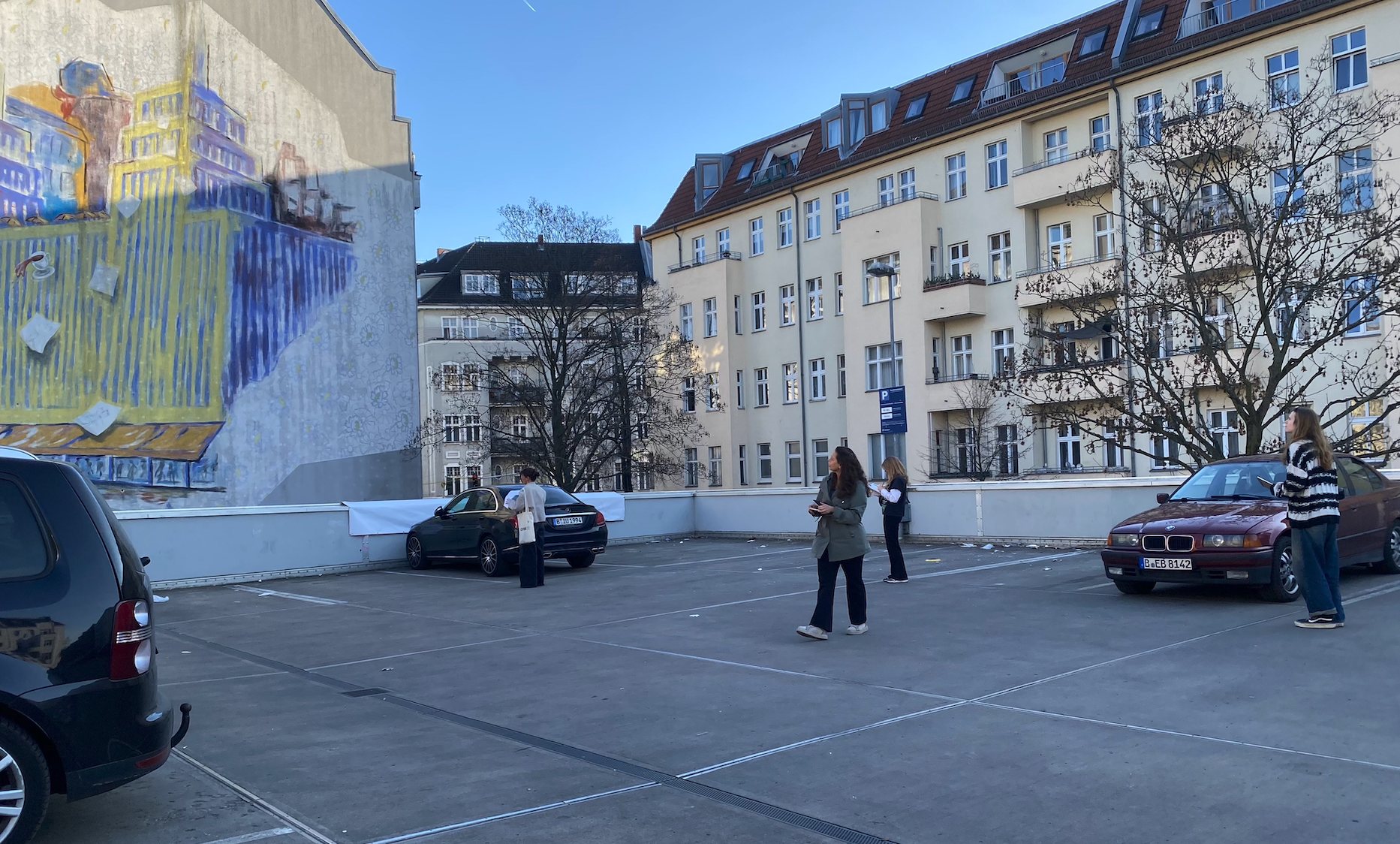
We tried the method before asking anyone else to
The team spent 30 minutes in front of a mural, looking at it from different spots. It shaped how we recreated the experience indoors, including the prompt cards that guided visitors.
The installation
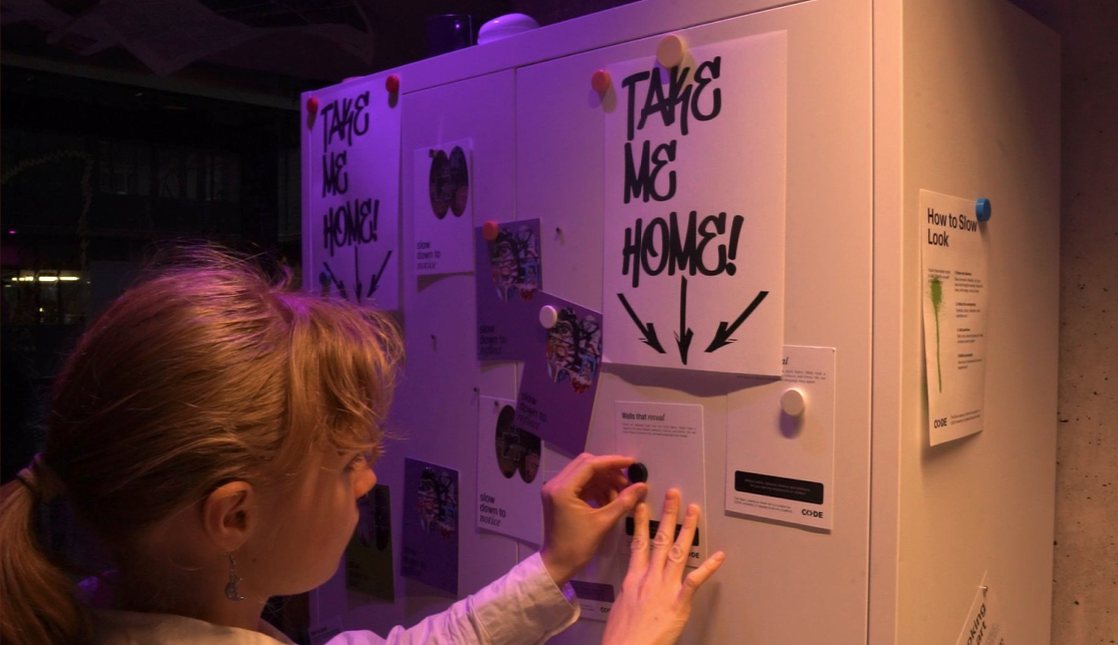
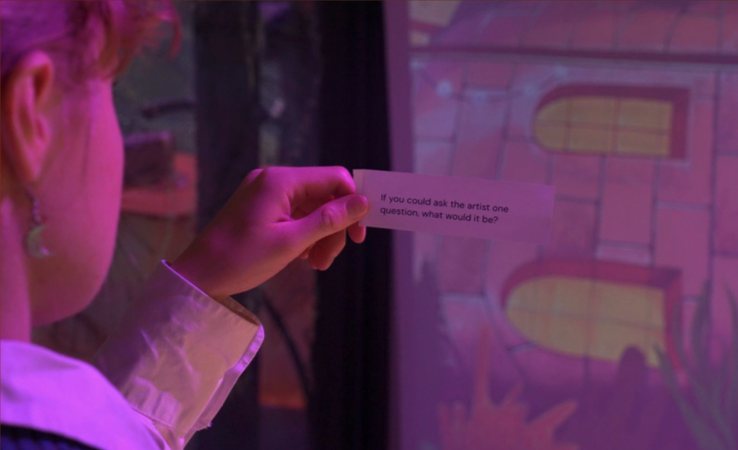
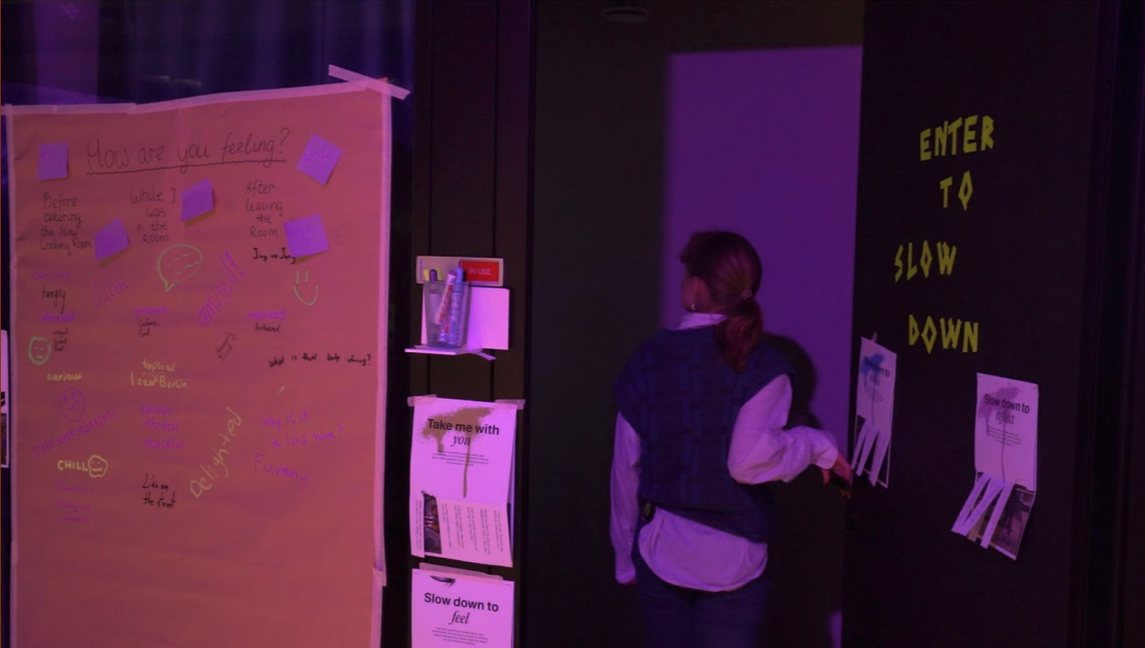
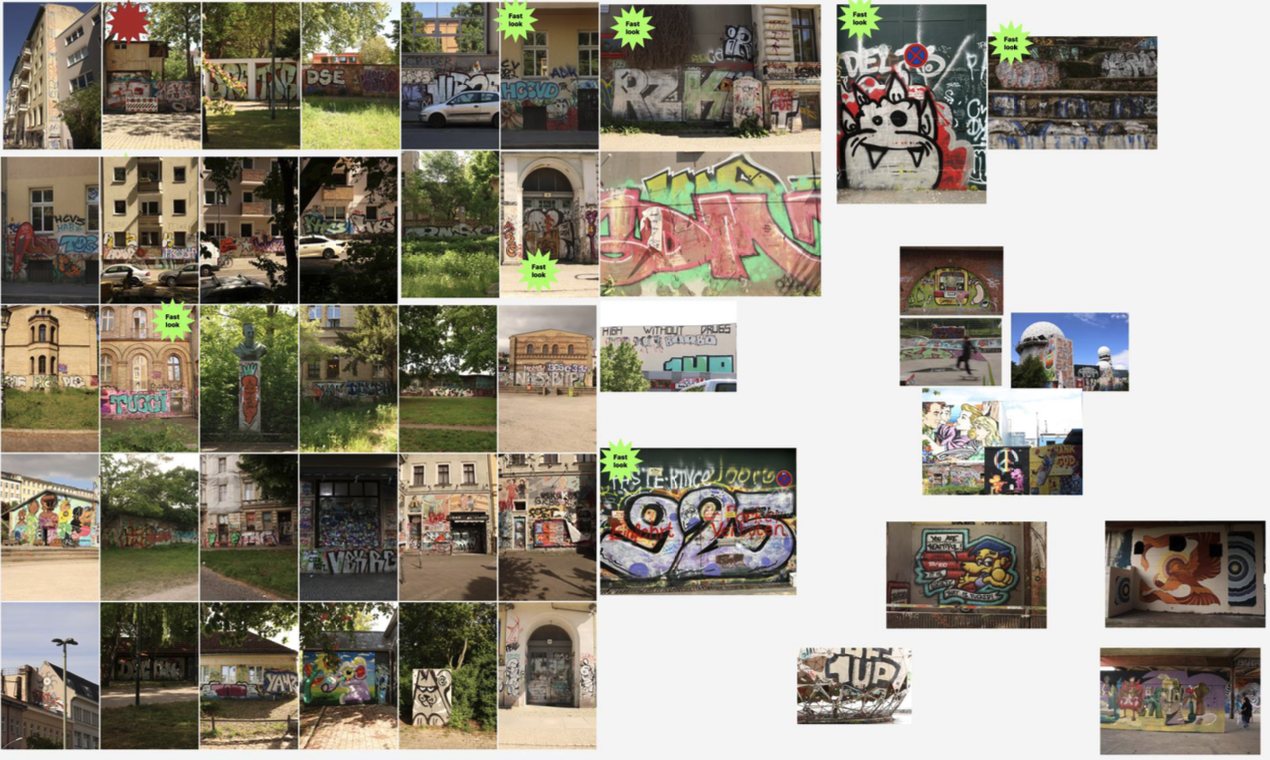
I documented the installation in photos and video for future stakeholders and conference applications. I also helped choose the projected photos, looking for ones that showed enough of the surroundings to feel immersive while still keeping your attention on a single piece.
What I'd do differently
Don't narrow things down too early. The problem statement named a specific group and city before our research had confirmed it applied.
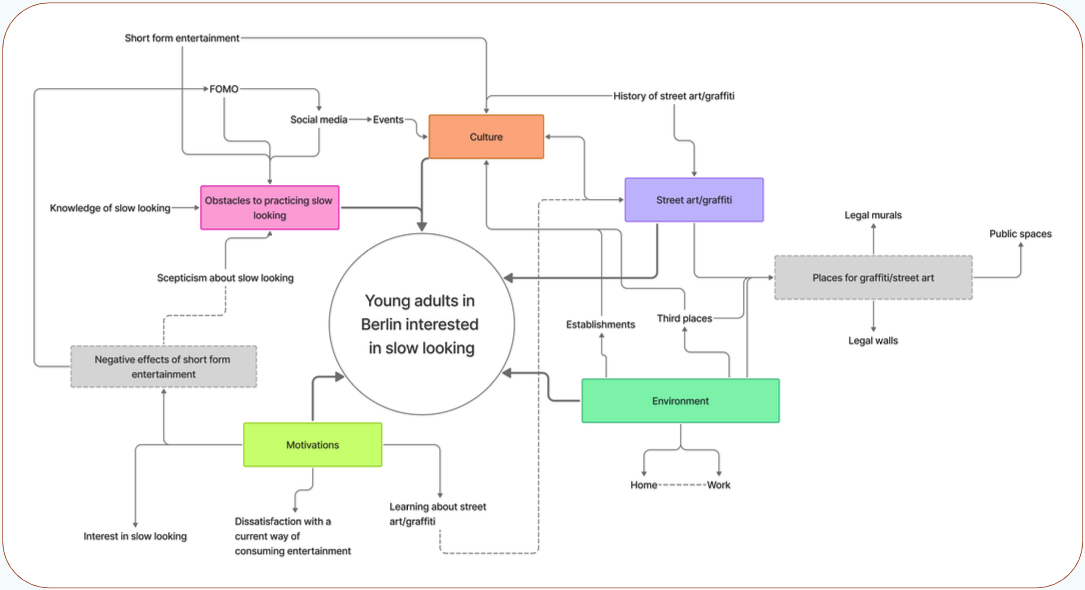
Make maps specific. The system map would have been more useful if it charted existing slow looking practices, stakeholders and funding.
Storyboards carry assumptions. Ours was based on our own experience of slow looking. Testing with visitors earlier would have challenged that.
The group went on to explore a digital version of the project. When I started my bachelor's thesis I stepped back and handed all our assets over to the team.