Experiencing Agency
An app for neighbourhood action groups that helps newcomers feel welcome and keeps everyone in the loop. It grew out of two rounds of interviews and three prototypes.
- Role
- Solo project: research, concept, prototyping and testing
- Methods
- Interviews, clustering, storytelling, paper and hi-fi prototypes
- Tools
- Figma
- Timeline
- February to August 2025
The challenge
People felt they could make the biggest difference in small, local groups. But the group chats those groups relied on were messy and confusing, sometimes even alienating, and newcomers found it hard to keep up or feel part of things.
The outcome
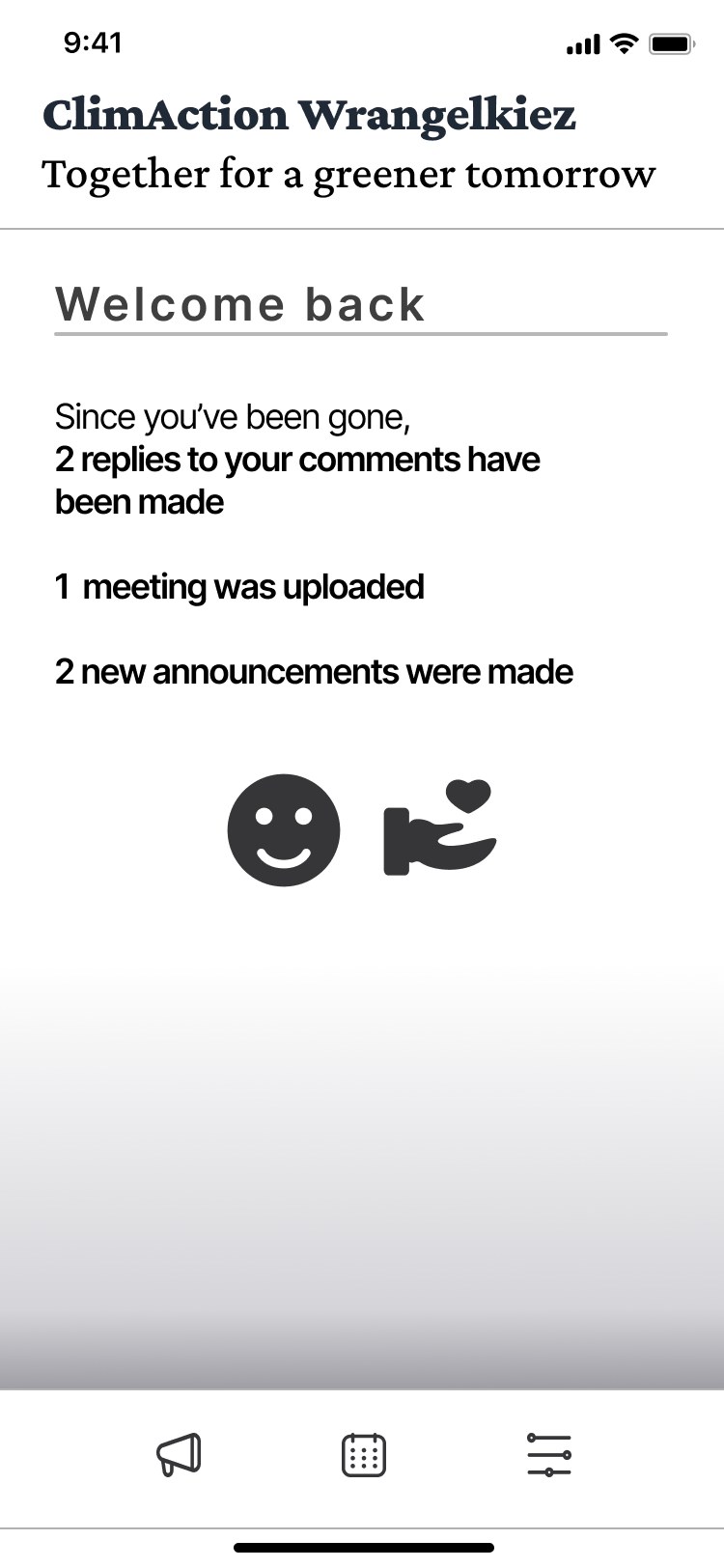
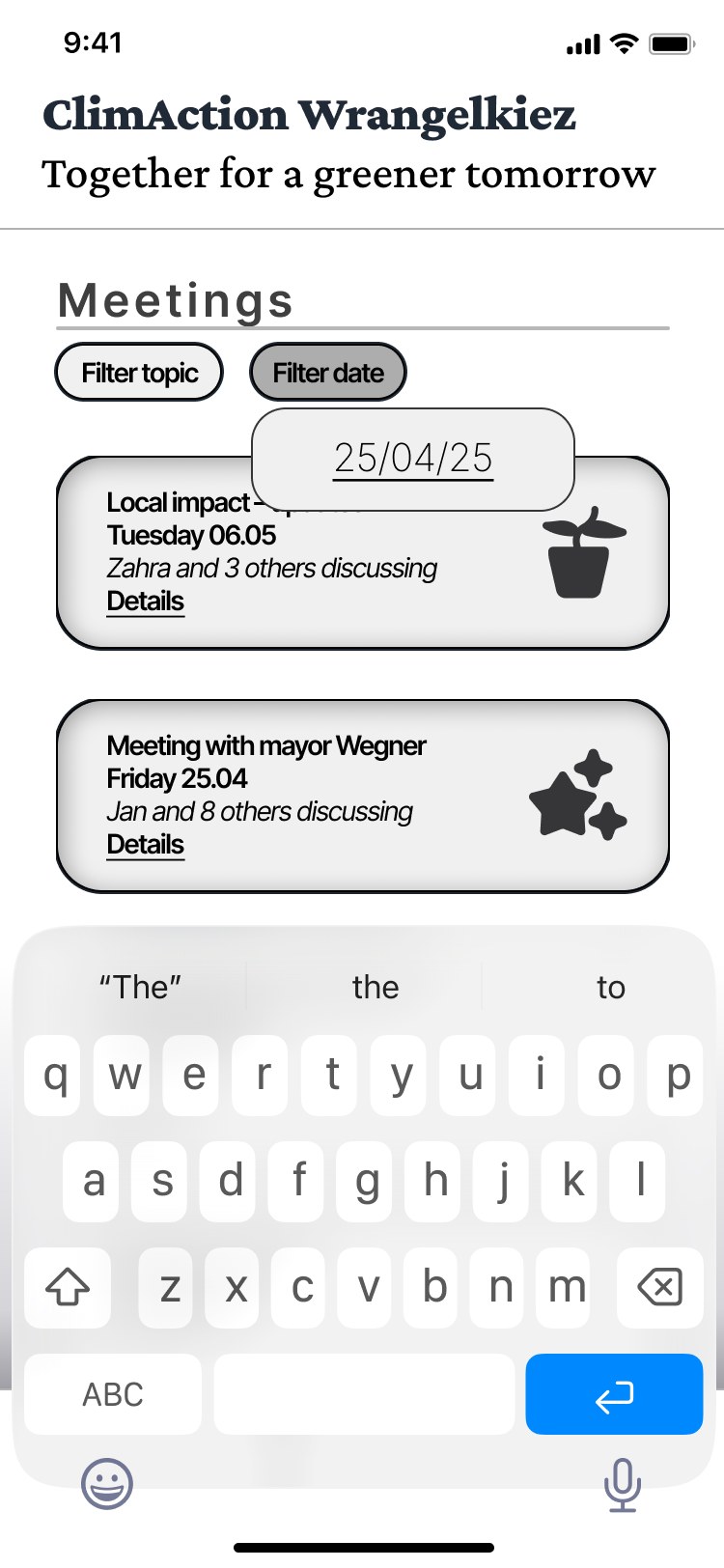
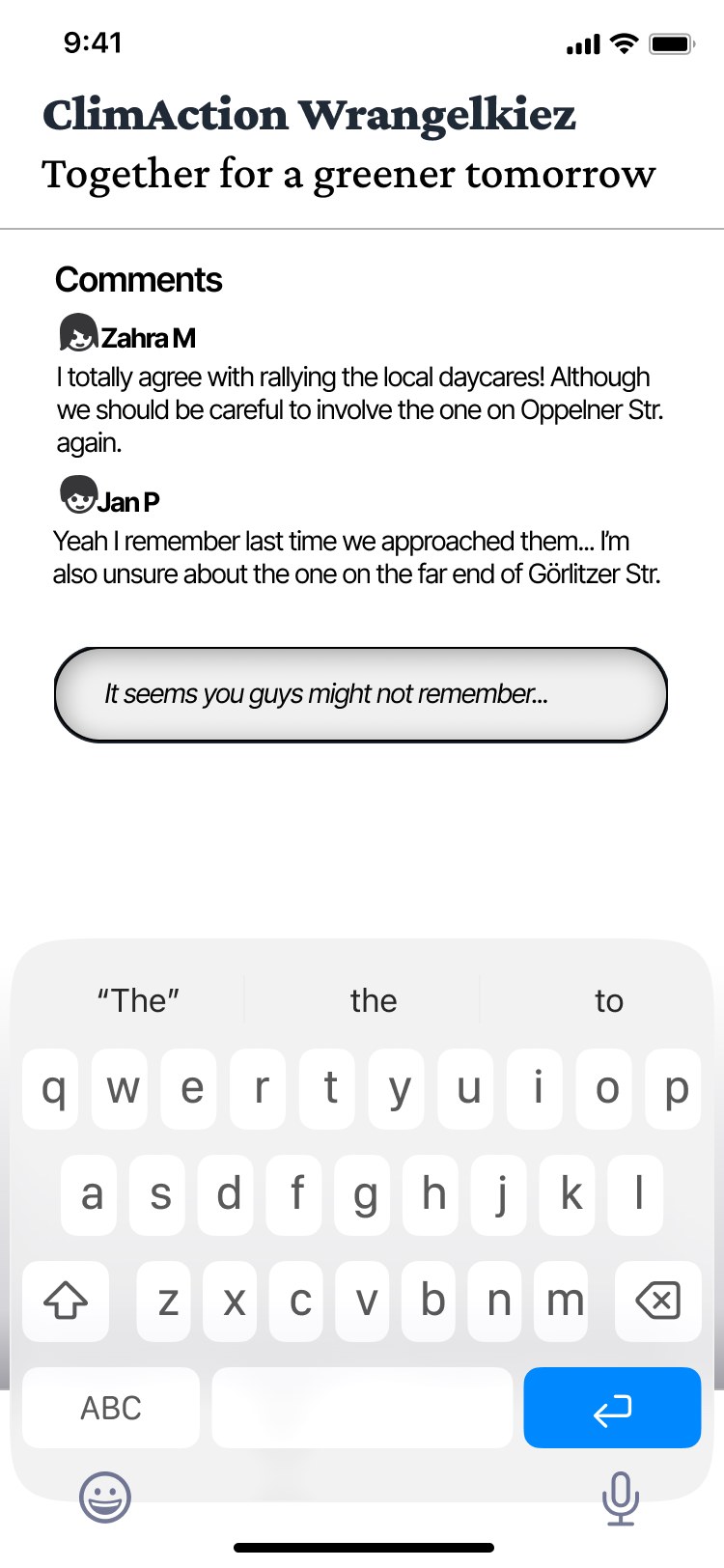
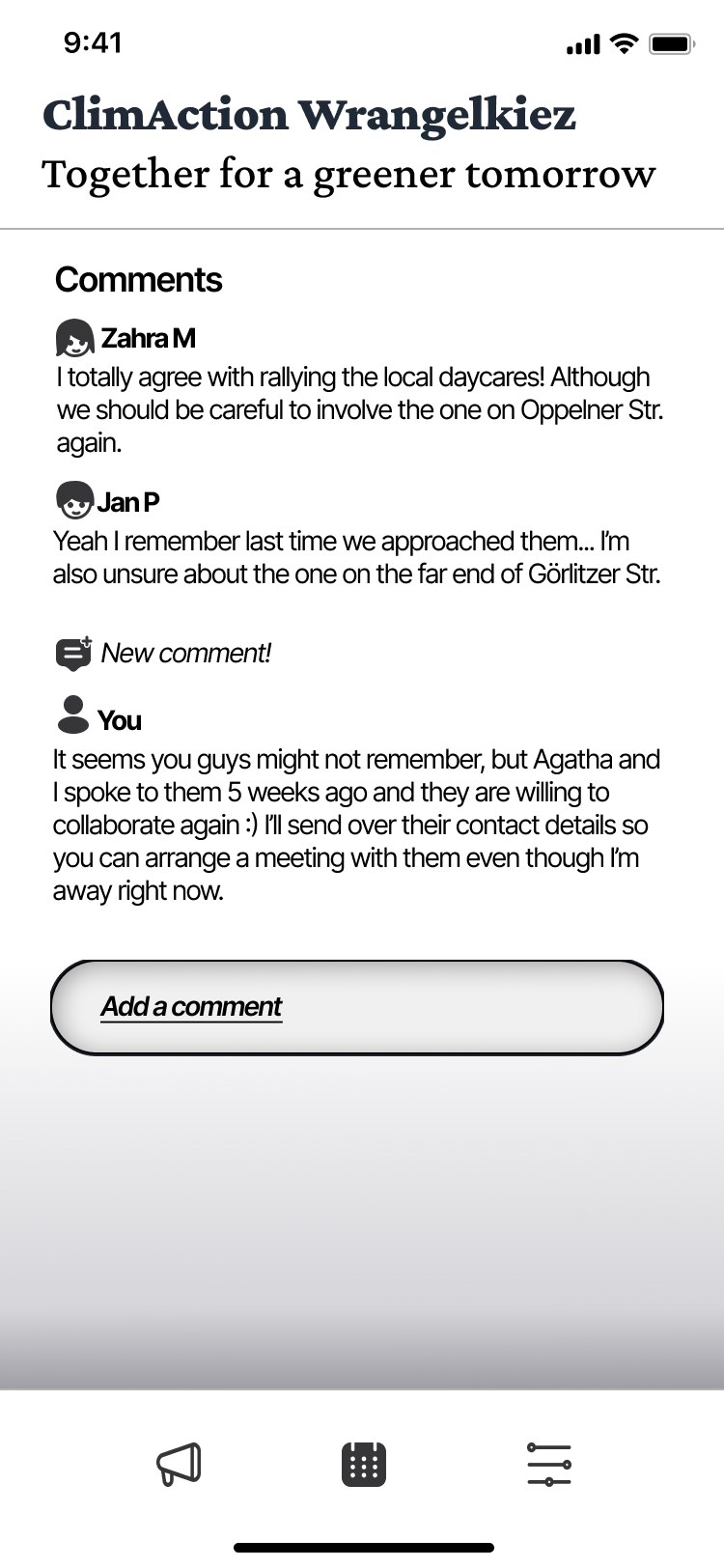
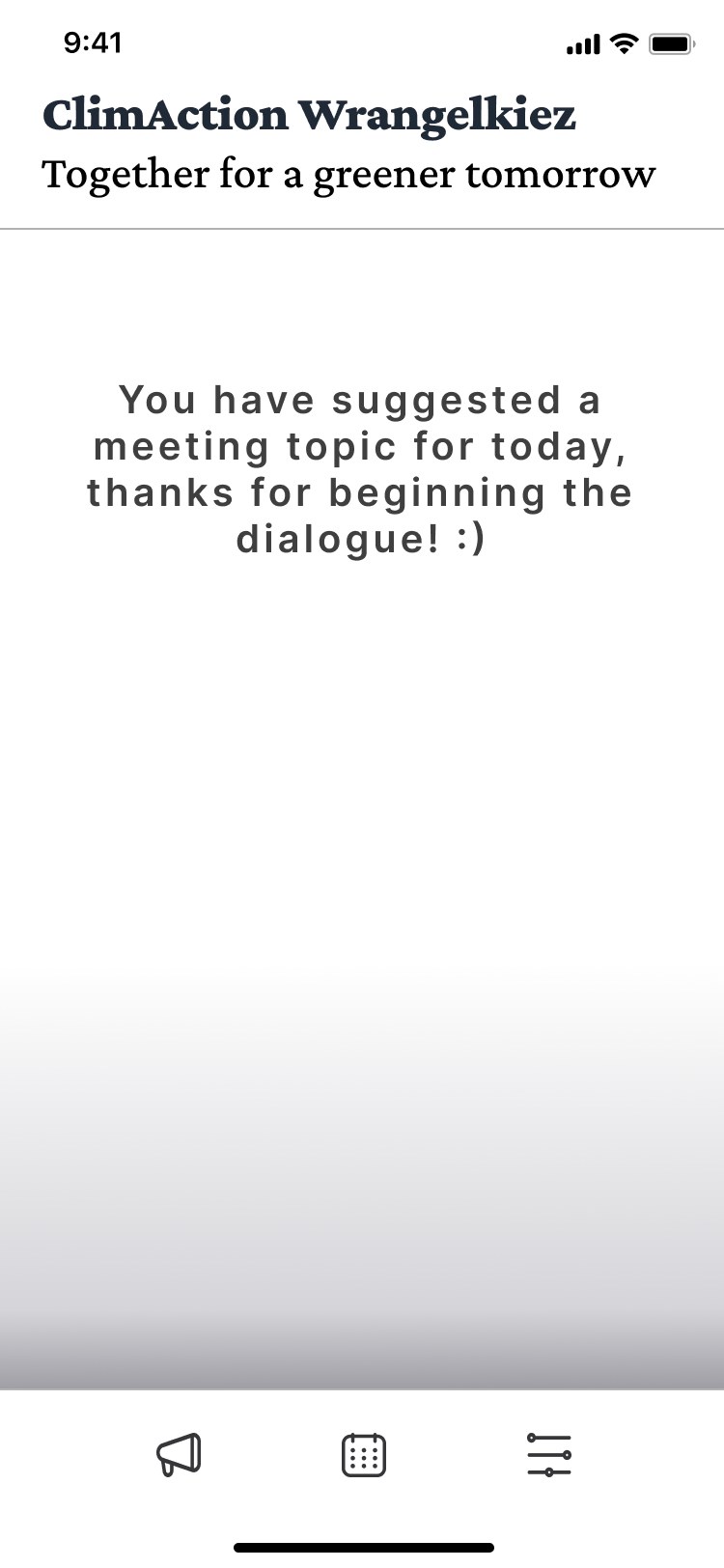
A prototype that brings some of the warmth of meeting in person into an app. It greets you with a friendly summary of what's changed, makes meetings easy to find, puts names and faces to members and thanks you when you contribute.
- Interviews
- Clusters & stories
- Prototype 1
- Interviews, round 2
- Prototype 2
- Final prototype
When do people feel they can make a difference?
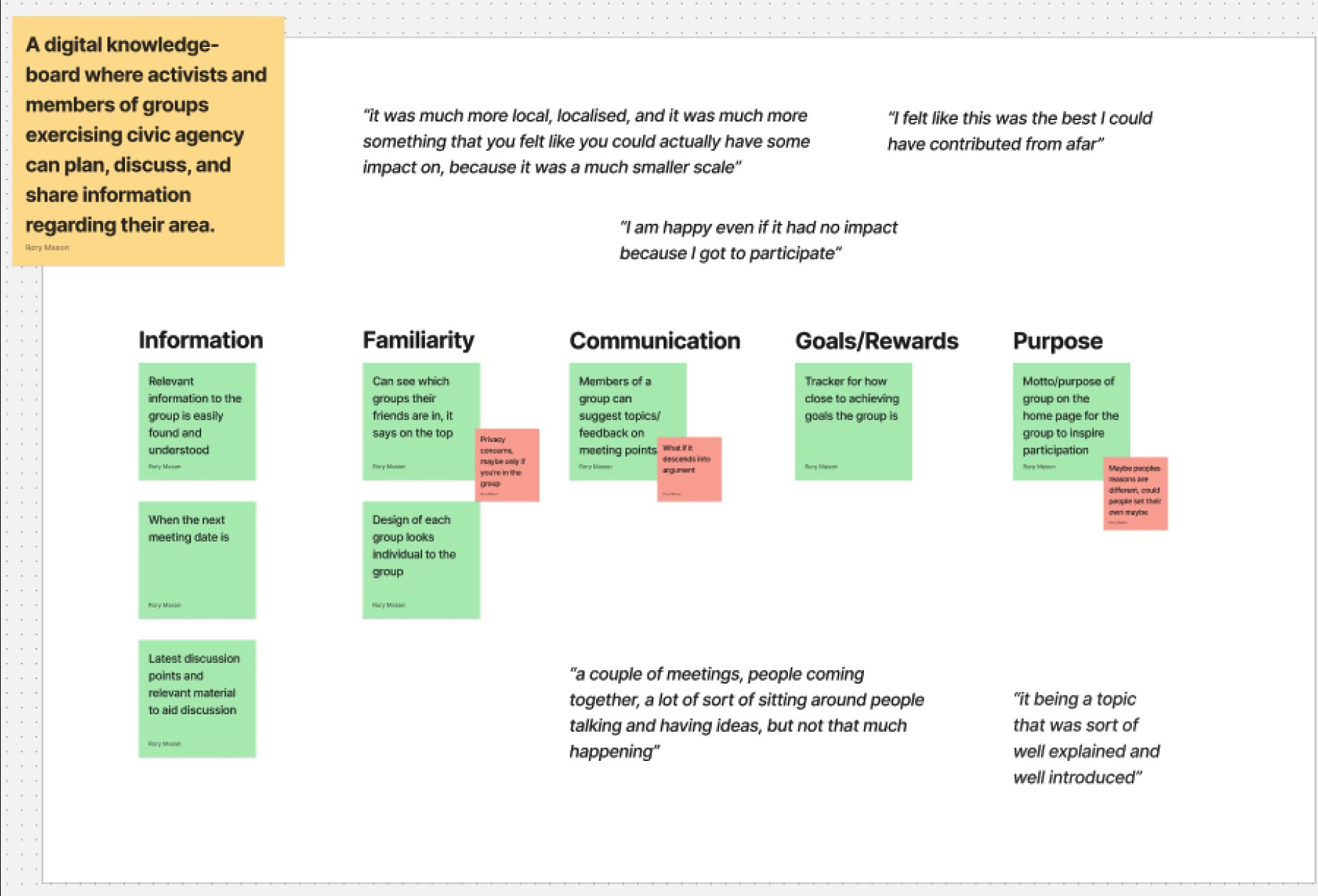
I spoke to people involved in DIY art collectives, neighbourhood groups, student activism and community archives about times they'd felt good about taking part. I transcribed and tagged each interview, then clustered what I found into themes.
Local feels possible
"It was much more local... something that you felt like you could actually have some impact on."
Taking part is the reward
"I am happy even if it had no impact, because I got to participate."
Online feels messy
Members preferred talking in person, where it's easier to read someone's tone. The chats they used instead felt confusing, and nobody knew of anything better.
The first prototype proved my assumption wrong
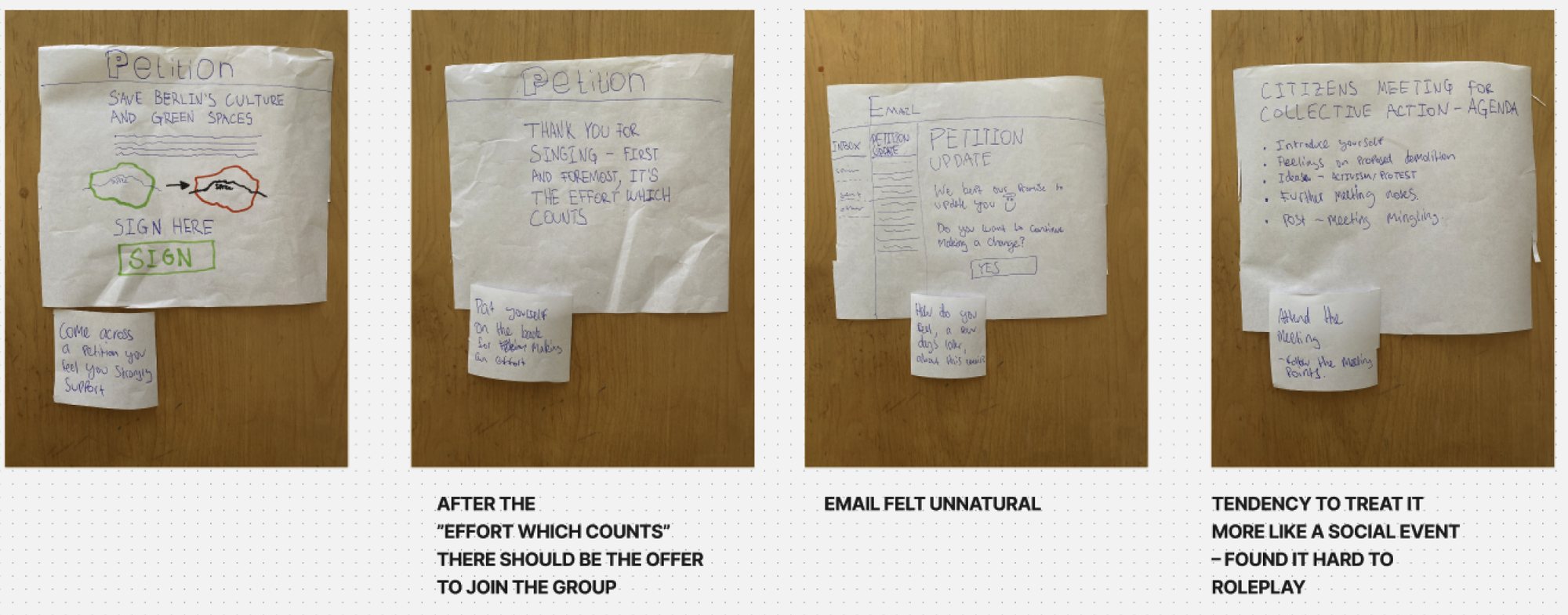
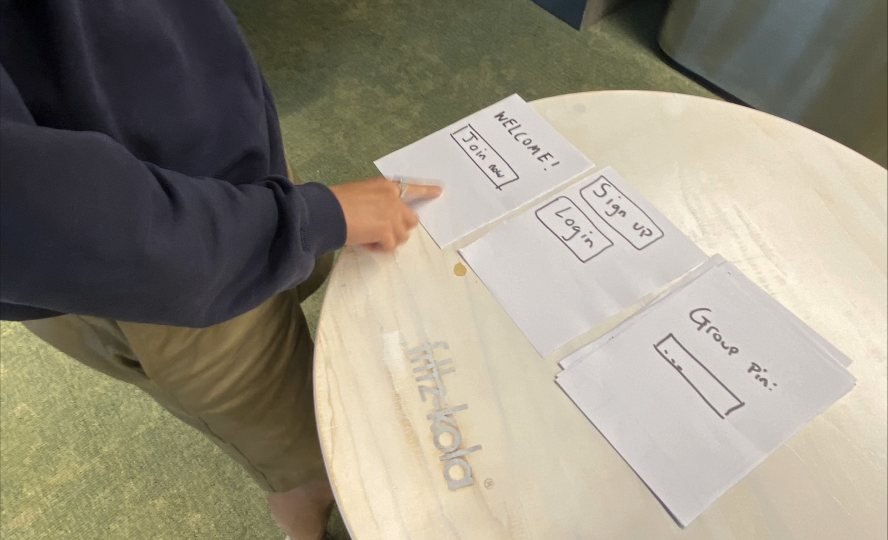
My first prototype assumed people struggle to find groups to join. Testing showed the harder part actually comes after joining: feeling welcome and keeping up. So I went back for a second round of interviews about community and communication, and rebuilt the idea around them.
What round 2 showed
The second round pointed to four themes: communication and clarity, familiarity, positive associations and how an experience begins. Feedback on prototype 2 then shaped the final high-fidelity version.
Bringing the in-person feeling online


What testing taught me
Being upbeat all the time felt unrealistic. The friendly tone worked, but it should change with what each message is about.
Meetings belong in the main menu. Upcoming meetings were still too hard to find, and the welcome summary should link straight to them.
Give each group a stronger identity. Its own colours and symbol would build more of a sense of place.